
Tarangire National Park is where ancient baobabs, vast savannas, and some of Tanzania’s largest elephant herds come together in one remarkable landscape. Just a few hours from Arusha, the park offers a different rhythm from the open plains of the Serengeti, with wildlife gathering around the Tarangire River during the dry season and disappearing into greener habitats when the rains return. Whether you are drawn by elephants, dramatic scenery, exceptional birdlife, or a quieter safari experience, Tarangire rewards you with something deeper than a checklist of wildlife: a chance to see how water, seasons, and landscape shape life in the African wilderness.
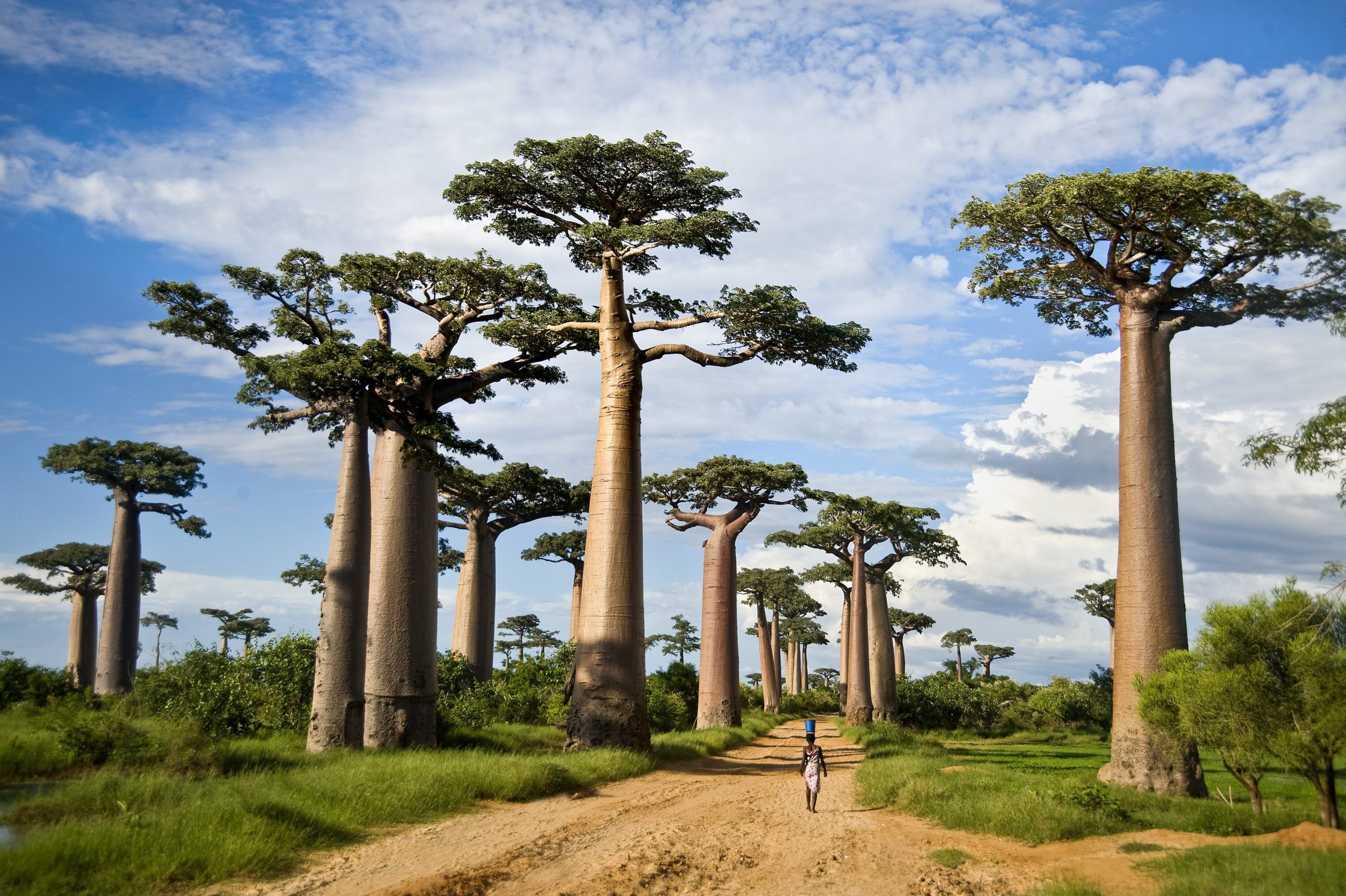
Tarangire National Park is one of Tanzania’s most rewarding wildlife destinations, especially for travelers who want to experience a safari landscape that feels different from the vast plains of the Serengeti. The park is defined by ancient baobabs, seasonal rivers, open grasslands, woodland, and some of the largest concentrations of elephants in Tanzania.
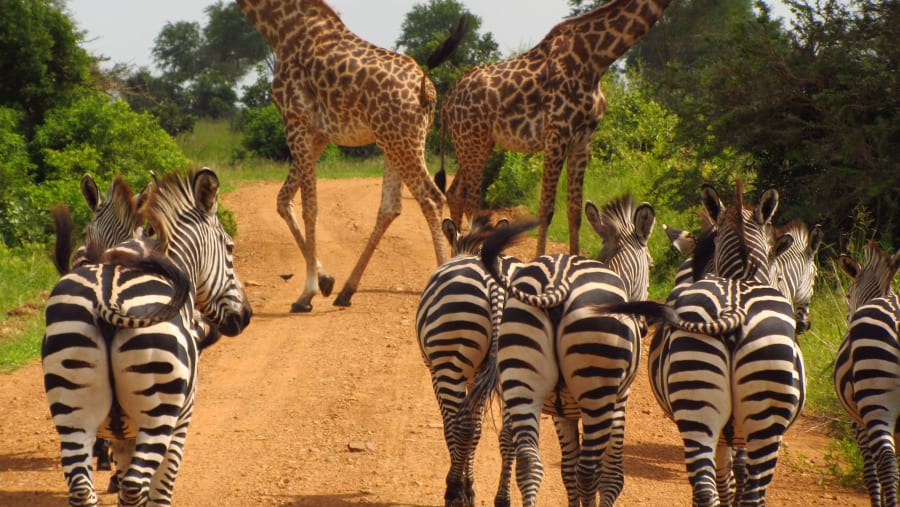
What makes Tarangire particularly special is the way wildlife responds to water. During the dry season, the Tarangire River becomes a critical source of water, drawing elephants, giraffes, zebras, wildebeest, buffalo, antelopes, and predators into the surrounding landscape. This creates a natural concentration of wildlife that can make game viewing exceptionally rewarding.
But Tarangire is more than an elephant destination. Its mosaic of habitats supports an impressive range of species, including lions, leopards, cheetahs, hyenas, African wild dogs in the wider ecosystem, and an extraordinary diversity of birds. The park is also known for distinctive species and dry-country wildlife that can make a safari here feel different from what you encounter elsewhere in northern Tanzania.
The landscape itself is part of the experience. Towering baobabs rise above the savanna, while elephant herds move beneath them and giraffes browse among acacia trees. In some areas, the scenery feels almost prehistoric, giving Tarangire a visual identity that is immediately recognizable.
For travelers planning a Northern Tanzania safari, Tarangire also offers an important advantage: it can complement other major destinations rather than simply compete with them. A safari combining Tarangire with Lake Manyara, the Ngorongoro Conservation Area, and the Serengeti creates a progression through remarkably different ecosystems.
The deeper appeal is this: Tarangire rewards travelers who pay attention to the relationship between water, landscape, and wildlife. Once you understand that pattern, the park becomes much more than a place to look for animals. It becomes a living ecosystem whose seasonal rhythm explains why wildlife is here, when it is here, and where you are most likely to find it.
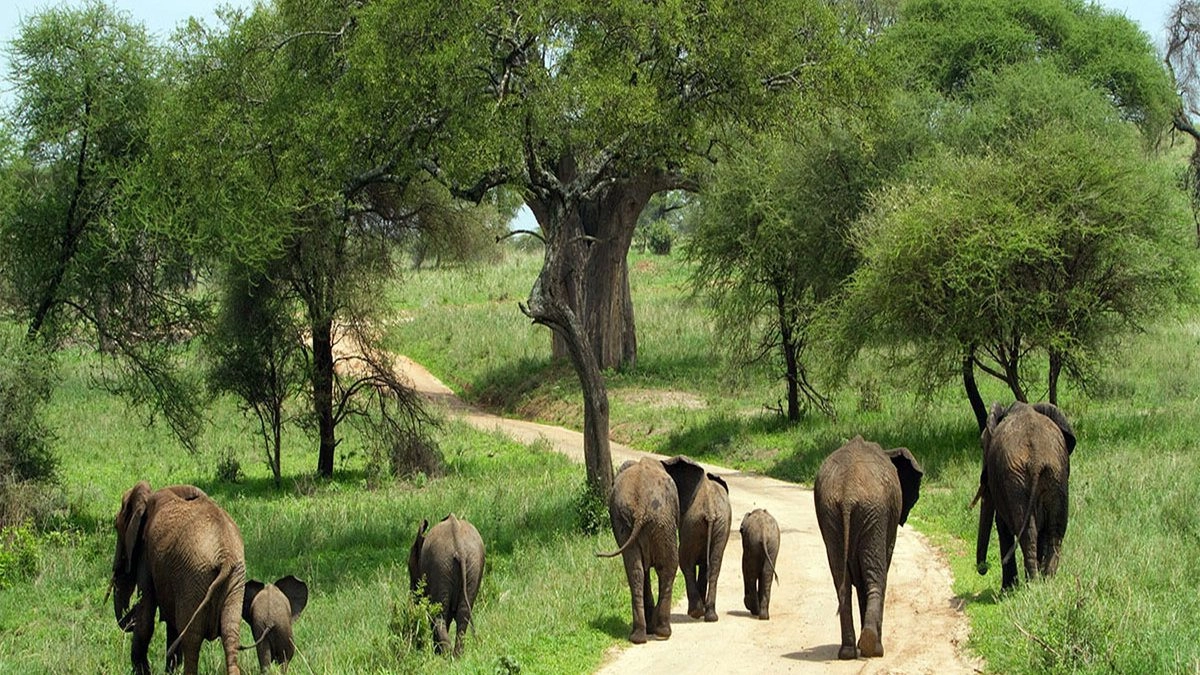
The dry season, particularly from June to October, is generally considered one of the best periods for visiting Tarangire. As seasonal water sources disappear across the surrounding landscape, wildlife becomes increasingly concentrated around the Tarangire River and remaining water sources.
This concentration can make game viewing easier and more predictable. Large elephant herds become one of the park’s defining spectacles, while other animals gather around water and nearby feeding areas.
However, the dry season is not automatically the best choice for every traveler. If your priority is birdwatching, lush scenery, newborn animals, or fewer safari vehicles, the wetter months can offer a very different experience.
From around November through May, rainfall transforms the landscape. Grasslands become greener, seasonal water sources return, and wildlife can disperse more widely throughout the ecosystem.
This changes the character of the safari.
Instead of seeing wildlife concentrated around permanent water, you may spend more time exploring different habitats and searching for animals across a greener landscape. Birdlife is also particularly rewarding during this period, with migratory species adding to Tarangire’s already impressive bird diversity.
The wet season can therefore suit travelers who value landscape beauty, birdwatching, photography, and a quieter atmosphere as much as concentrated wildlife viewing.
There is no single month that is perfect for everyone.
If your priority is large elephant gatherings and concentrated wildlife, the dry season is usually the strongest choice.
If you prefer green scenery, birdlife, and a more tranquil safari atmosphere, the wetter months can be especially appealing.
This distinction matters because “best time to visit Tarangire” is really a question about what you want the safari to feel like. The same park can offer two very different experiences depending on when you arrive.
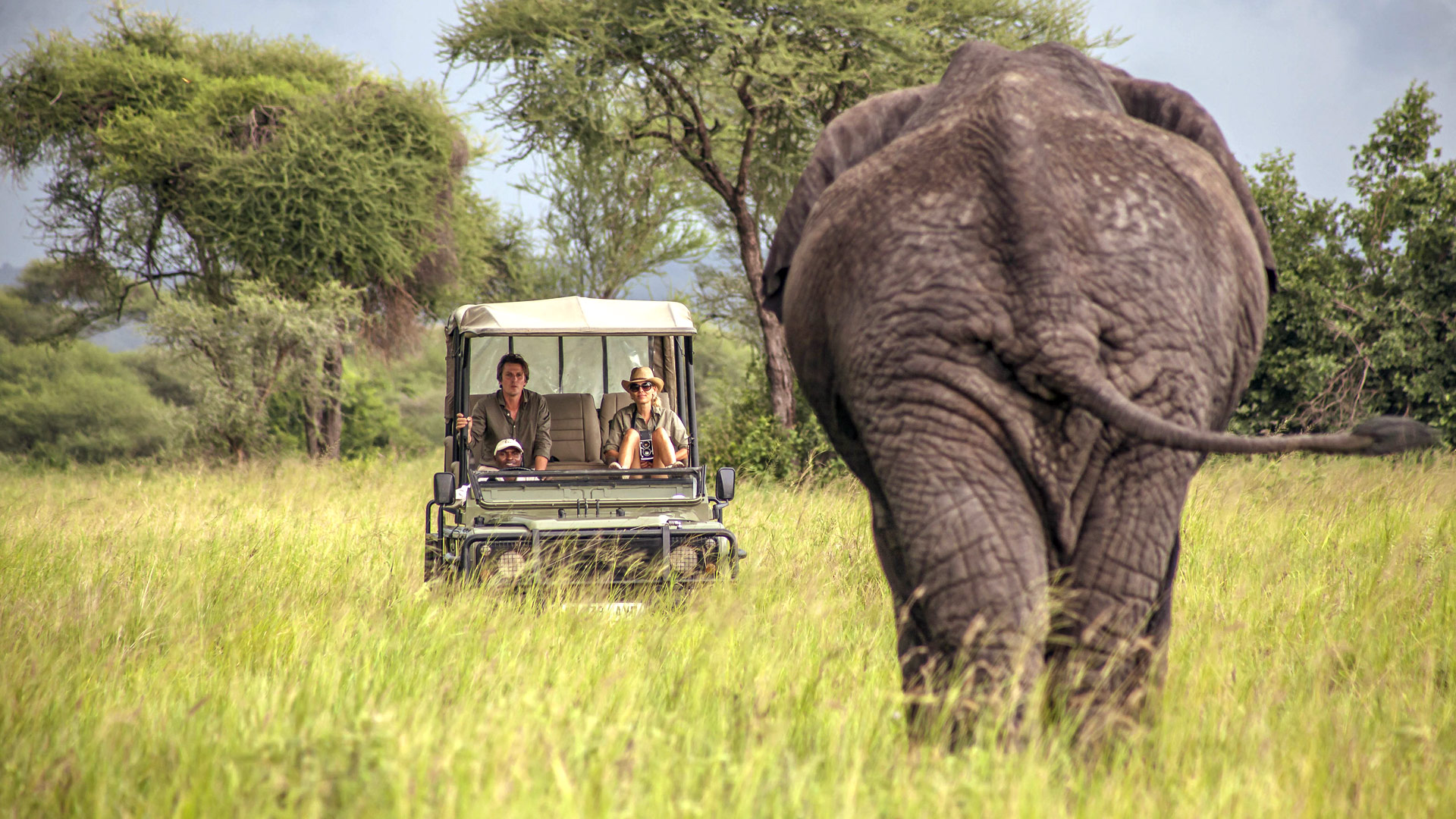
Tarangire National Park works particularly well as part of a Northern Tanzania safari circuit. Its location makes it a natural early stop for travelers exploring destinations such as Lake Manyara, Ngorongoro, and the Serengeti.
A typical Tarangire safari can range from a day trip to a multi-day itinerary, depending on how deeply you want to explore the park and the wider region.
A day safari is suitable for travelers with limited time who still want to experience Tarangire’s distinctive landscapes and wildlife.
A well-planned day typically focuses on game drives through areas where wildlife activity is strongest, with opportunities to see elephants, giraffes, zebras, buffalo, antelopes, and predators.
The advantage is efficiency. You can experience Tarangire without dedicating several nights to the park.
The trade-off is depth. Tarangire is a park where spending more time can reveal changes in animal movement, light, and landscape that a rushed visit may miss.
A longer stay gives you greater flexibility to explore different habitats and adjust your game drives around wildlife activity.
It also allows the safari to become less about checking animals off a list and more about observing behavior, interactions, landscapes, and seasonal patterns.
For photographers and travelers who prefer slower exploration, this can make a meaningful difference.
One of the strongest ways to experience Tarangire is to combine it with other destinations.
A route might connect:
Tarangire → Ngorongoro → Serengeti
or include:
Tarangire → Lake Manyara → Ngorongoro → Serengeti
Each destination contributes something different. Tarangire introduces the safari through elephant-rich woodland and baobab landscapes, Ngorongoro provides an extraordinary concentration of wildlife within a volcanic caldera, while the Serengeti opens into vast plains and one of Africa’s most famous wildlife ecosystems.
This is why Tarangire should not be judged simply by asking whether it has “as many animals” as the Serengeti. Its value lies partly in what it adds to the overall safari story.
Depending on the season and location, safari-goers may encounter:
Tarangire is particularly famous for elephants, but the real strength of the park is the combination of wildlife, habitat diversity, seasonal movement, and scenery.
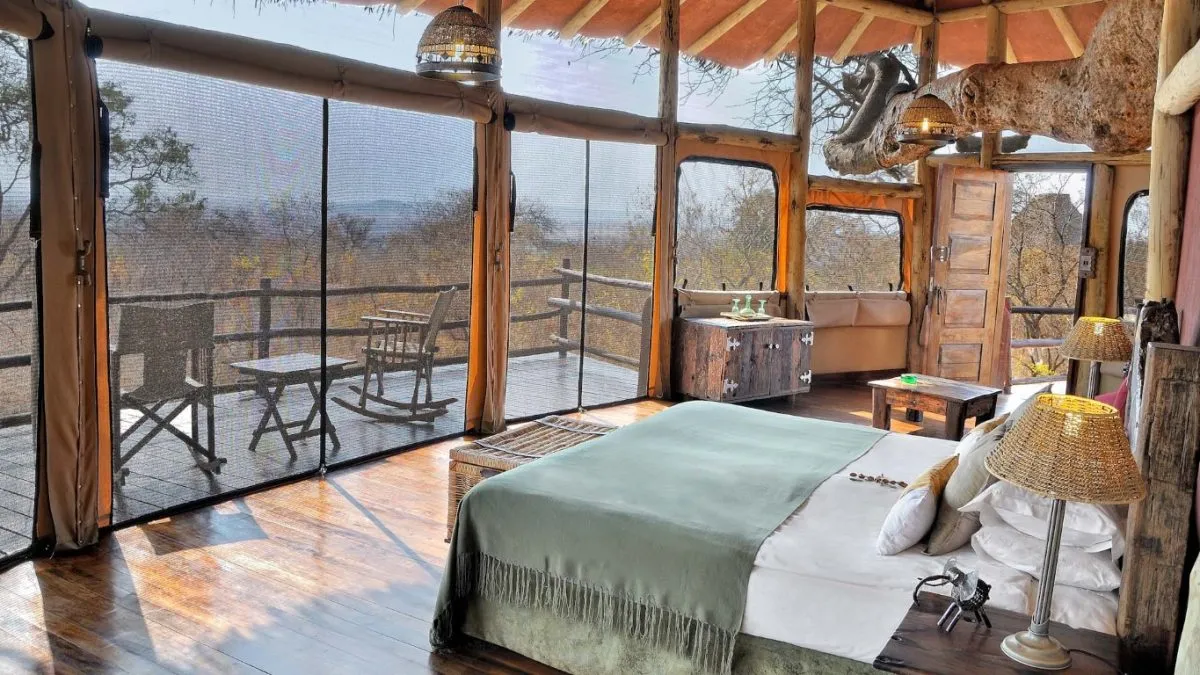
Accommodation around Tarangire ranges from safari lodges and permanent camps to tented camps and other safari-focused stays.
Where you stay can influence the rhythm of your experience.
Staying inside or close to the park can reduce the amount of time spent driving between your accommodation and the wildlife areas, giving you more opportunity to experience the landscape during the cooler and quieter hours of the day.
Properties outside the park can also be excellent choices, particularly when they offer strong views, comfortable facilities, private surroundings, or convenient access to the park gates.
When comparing Tarangire accommodation, do not look only at the room or tent.
Consider:
For a luxury safari, the right accommodation should feel like an extension of the landscape rather than simply a comfortable place to sleep.
A tented camp overlooking the savanna, for example, can create a completely different emotional experience from a conventional hotel-style property.
The key is to match the accommodation style with the type of safari you want, not simply choose the highest-rated property.
Tarangire is relatively easy to incorporate into a Northern Tanzania safari, but good planning can significantly improve the experience.
Most visitors reach Tarangire as part of a safari departing from Arusha, Tanzania’s main northern safari hub. The park is accessible by road, making it practical to combine with other destinations in the northern circuit.
Private safari vehicles are particularly useful because they allow your itinerary to remain flexible around wildlife sightings, seasonal conditions, and the pace you prefer.
For many travelers, one full day can provide a rewarding introduction to the park.
However, two nights or more can be worthwhile if Tarangire is a major part of your trip, especially for photographers, birdwatchers, families, or travelers who prefer a slower safari pace.
The right duration depends less on the size of the park than on the experience you want.
Useful safari essentials include:
Neutral, practical clothing is generally more useful than dressing heavily for style. The goal is comfort, protection from the sun, and flexibility across changing temperatures.
Yes. Tarangire can be an excellent family safari destination because wildlife viewing can be rewarding without requiring the extremely long game-drive distances sometimes associated with larger safari itineraries.
Families should nevertheless choose accommodation and safari schedules carefully. Children generally benefit from shorter, well-paced drives with breaks rather than attempting to replicate an adult-oriented full-day game-drive schedule.
One of the easiest mistakes is treating Tarangire as merely a quick stop between Arusha and the Serengeti.
That approach can cause travelers to miss what makes the park distinctive.
Tarangire has its own ecological rhythm. Its elephants, baobabs, seasonal water sources, woodland, grasslands, and birdlife create an experience that deserves to be understood on its own terms.
The best Tarangire safari is therefore not necessarily the one that sees the most animals in the shortest time. It is the one that gives you enough time to understand why the animals are there, how the landscape shapes their movement, and what makes Tarangire different from every other stop on your itinerary.