
Mikumi National Park is one of Tanzania’s most accessible safari destinations and that accessibility is part of its appeal. Located in Morogoro Region, between Dar es Salaam and the southern safari circuit, Mikumi offers a genuine African wildlife experience without requiring the long travel time associated with some of Tanzania’s more remote parks.
For a first safari, a short wildlife escape from Dar es Salaam, or a southern Tanzania itinerary that continues toward Nyerere, Udzungwa or Ruaha, Mikumi can make a remarkably practical choice. Its open Mkata Floodplain, woodland edges and seasonal water sources create a landscape where elephants, buffalo, giraffes, zebras, wildebeest, hippos and predators can be encountered within relatively compact game-viewing areas.
But Mikumi is not simply a “quick safari” destination. The real attraction is the combination of accessibility, open landscapes and dependable big-game viewing a combination that allows travelers with limited time to experience the rhythm of an East African safari without sacrificing the feeling of being in the wild.
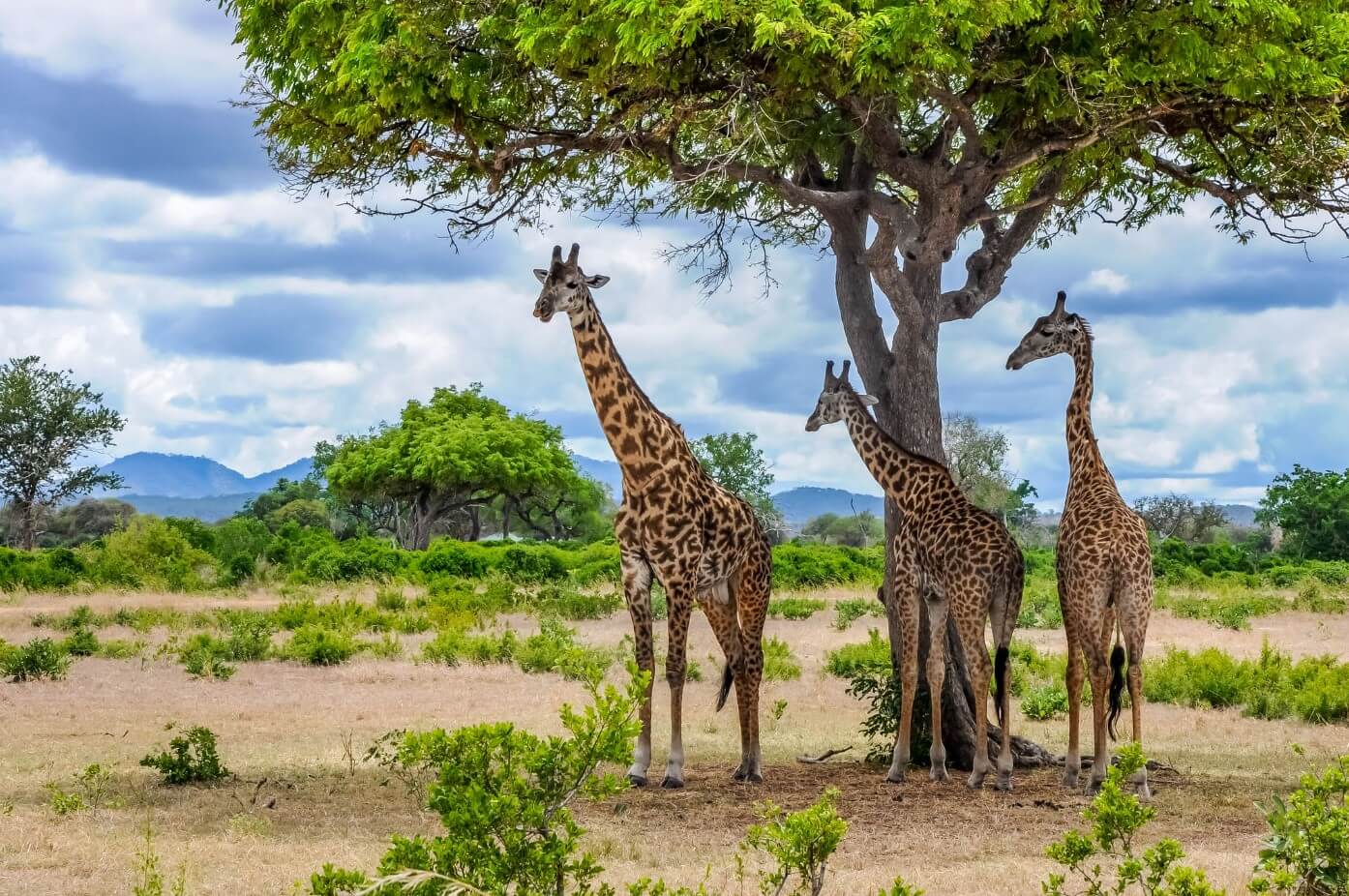
Mikumi is particularly appealing when you want real wildlife without an unnecessarily complicated itinerary.
The park covers approximately 3,230 square kilometres and forms part of a much larger ecological landscape connected with southern Tanzania. Its northern plains around the Mkata River are especially important for wildlife viewing, while woodland habitats provide opportunities for encountering species that are less obvious on the open plains.
The Mkata Floodplain is the visual heart of many Mikumi safaris. Open grasslands make it easier to scan the horizon, while water sources can draw animals together during the drier months.
You may encounter:
Mikumi is also home to less commonly seen species associated with its woodland habitats, including greater kudu, sable antelope and Lichtenstein’s hartebeest. These sightings are less predictable than the classic plains wildlife—which is precisely what makes them rewarding.
There is something psychologically different about watching wildlife on a wide floodplain.
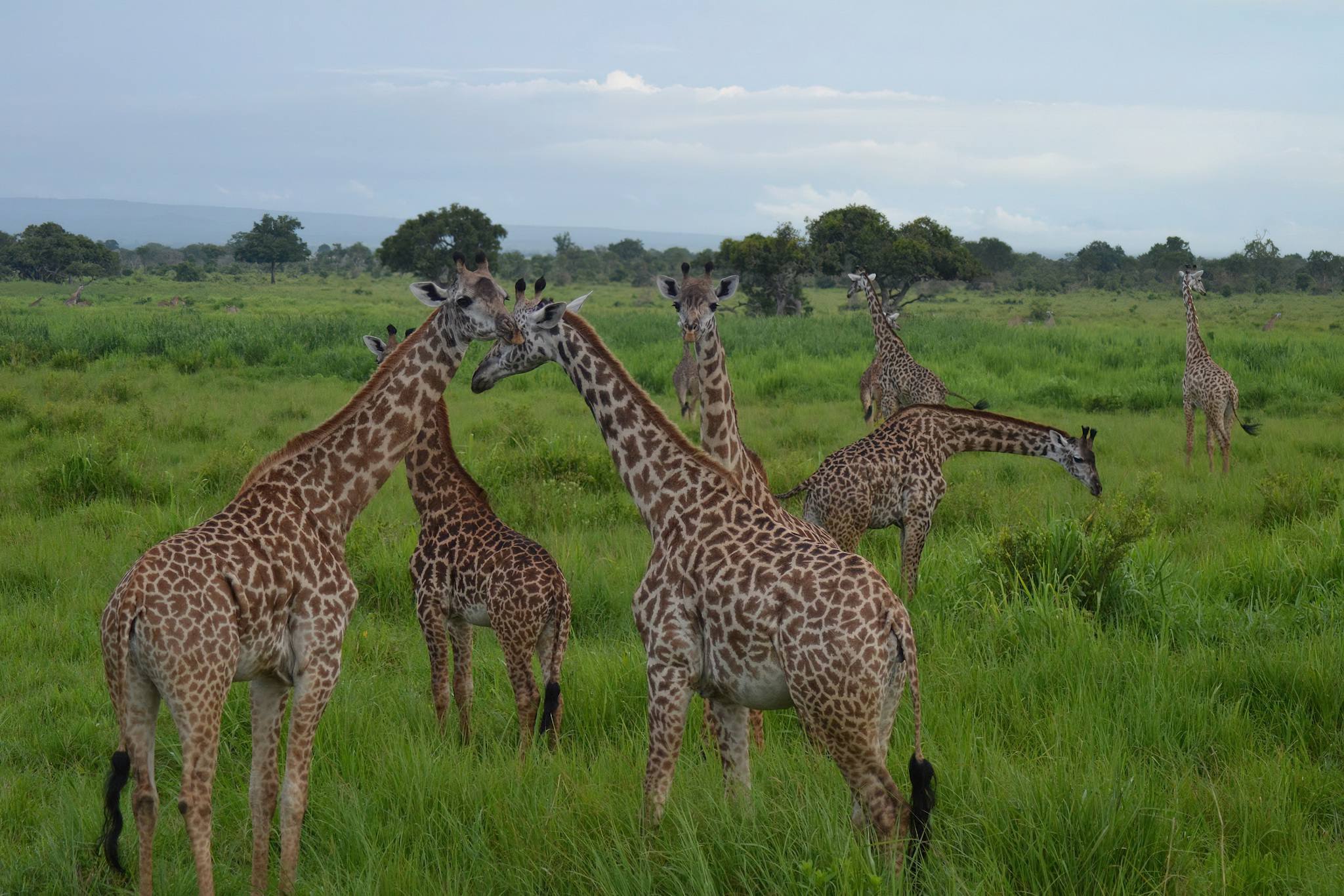
Instead of seeing one animal disappear immediately into dense vegetation, you often have a broader visual field: a giraffe moving across the grassland, buffalo gathering in the distance, elephants crossing an open area, or a lion resting beneath the shade.
That openness gives Mikumi much of its photographic character.
Mikumi’s greatest advantage may be geographical.
The park is approximately a four-hour road journey from Dar es Salaam under normal conditions, making it one of Tanzania’s most practical national parks for travelers who cannot dedicate a week or more to a safari. Scheduled and charter flights can also serve Mikumi Airstrip.
That makes Mikumi especially suitable for:
The important distinction is this: Mikumi saves travel time, not safari authenticity.
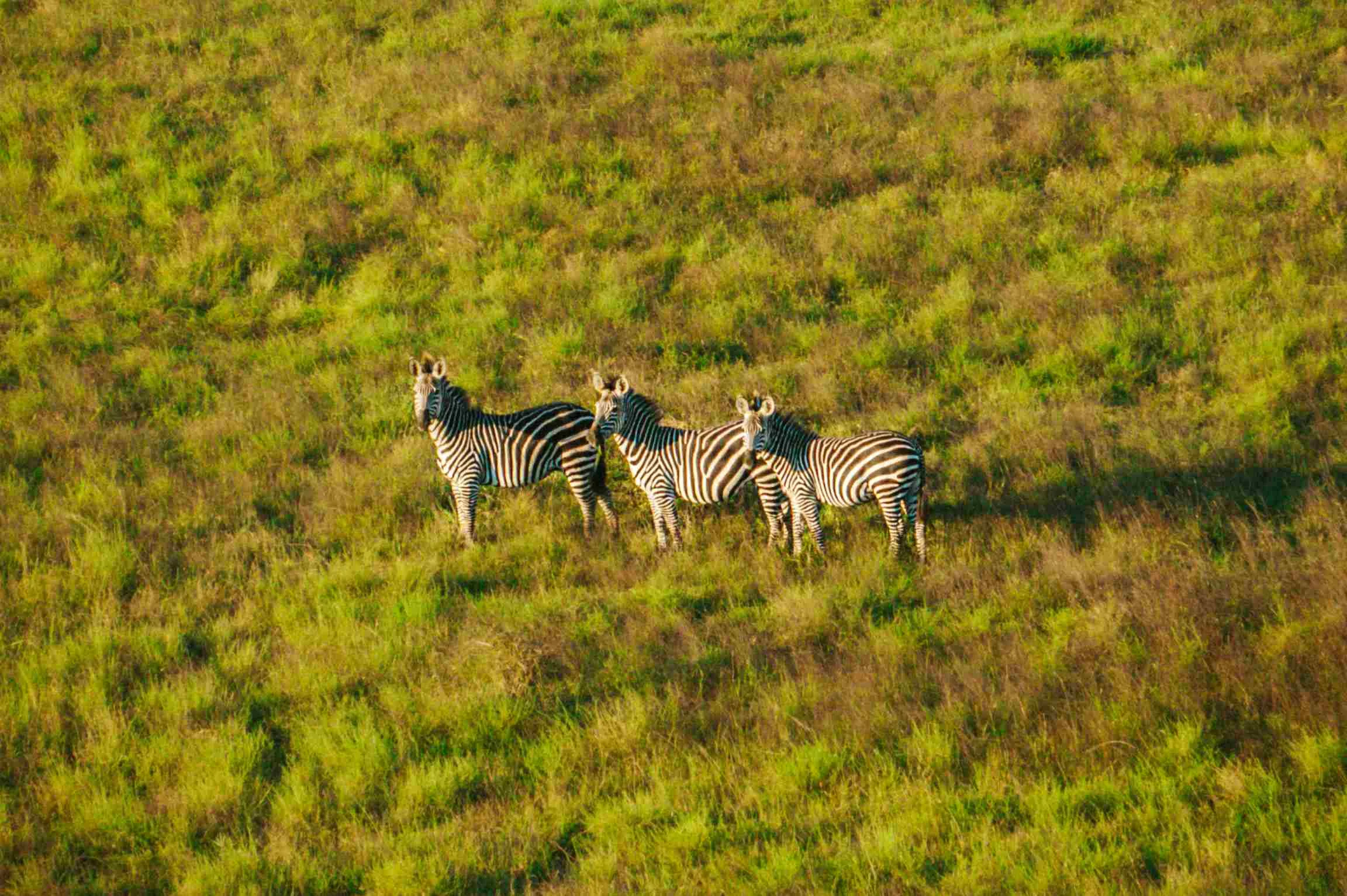
Mikumi can be visited throughout the year, but the experience changes considerably with the seasons.
The dry season is generally the strongest period for conventional game viewing. Vegetation becomes thinner, visibility improves and wildlife tends to concentrate around dependable water sources.
For travelers whose priority is seeing as many large mammals as possible, particularly elephants, buffalo and other plains wildlife, the dry months are an excellent choice. TANAPA identifies June–October as a strong period for concentrated wildlife viewing.
This is also when the landscape becomes visually cleaner for photography: fewer layers of dense vegetation separate you from the animals, and the low morning and late-afternoon light can create beautiful conditions.
The short rains transform the landscape.
Grass becomes greener, vegetation becomes more vibrant and the park can feel fresher after the dry season. For travelers who value scenery, birding and fewer crowds more than maximum wildlife concentration, this period can be particularly appealing.
The trade-off is that some tracks can become muddy and wildlife may be more dispersed.
The long rains bring dramatic skies, greener landscapes and a different character to the park.
This is not automatically the “wrong” season. It is simply a season for a different kind of safari traveler—someone who appreciates atmospheric landscapes, birdlife, photographic variety and a quieter experience.
Road conditions and accommodation availability should be checked carefully when planning during the wetter months.
If your priority is classic wildlife viewing, start with the dry season.
If your priority is green scenery, birding and a more seasonal atmosphere, consider the wetter months.
The best month is therefore not just a weather question. It depends on what you want the safari to feel like.
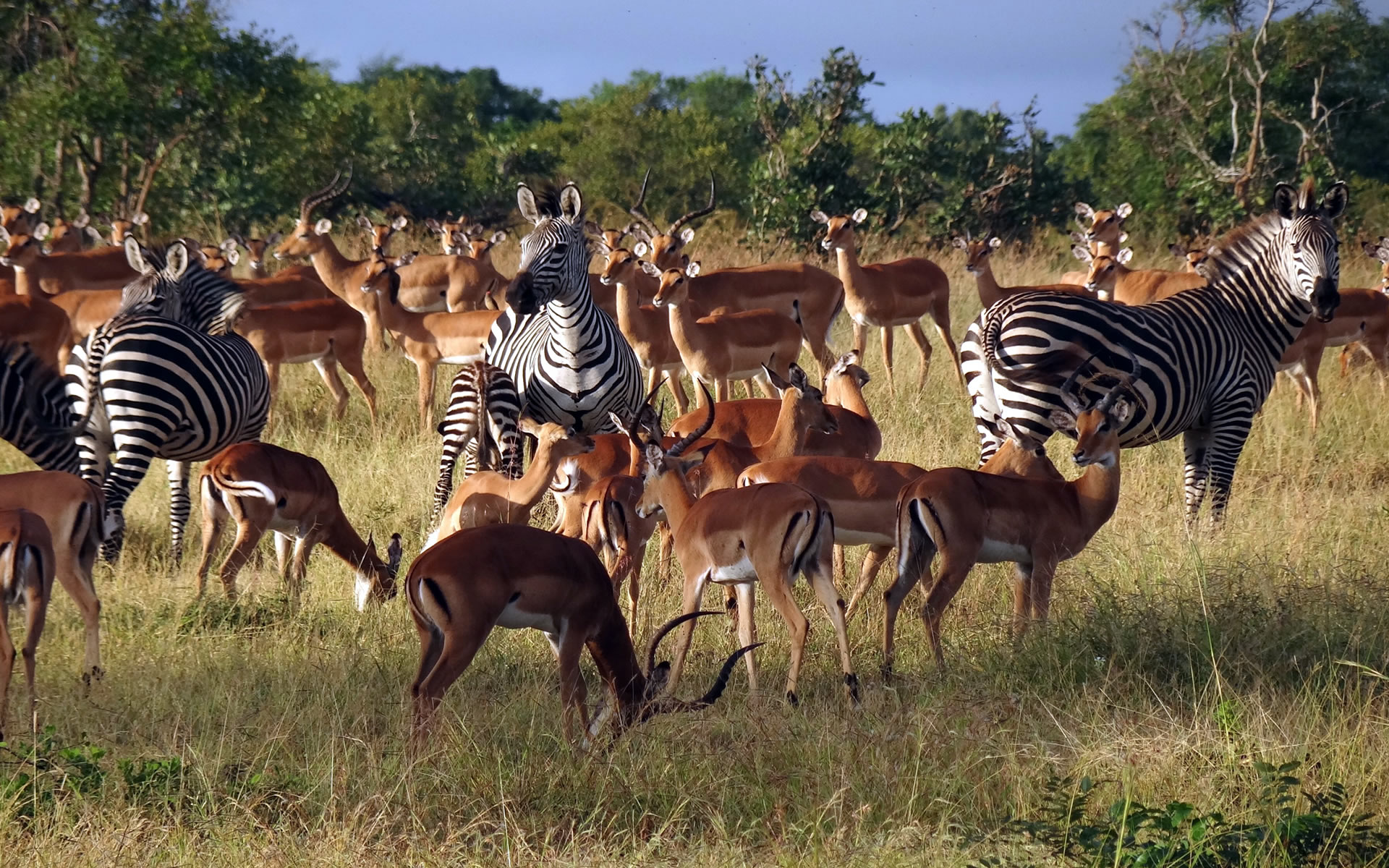
A Mikumi safari is primarily a wildlife-viewing experience, with game drives forming the foundation of most itineraries.
Game drives explore the Mkata Floodplain and surrounding habitats in search of large mammals and predators.
Early morning is particularly valuable because temperatures are cooler and many animals are active. Late afternoon can also produce excellent sightings and softer photographic light.
The experience is not simply about counting animals. A skilled guide helps you understand why an animal is in a particular place, what it is doing, and how the surrounding ecosystem influences its behaviour.
That difference can turn an ordinary game drive into a genuine wildlife lesson.
Where officially permitted and arranged with authorized guides, walking experiences provide a completely different perspective of Mikumi.
From a vehicle, the landscape is primarily visual.
On foot, it becomes sensory.
You notice tracks in the soil, insects moving through grass, bird calls above the trees and the subtle signs that larger animals have passed through an area.
TANAPA lists guided walks among the activities associated with Mikumi.
Mikumi is not only a big-game destination.
Its floodplains, acacia woodland and seasonal water bodies support diverse birdlife, including rollers, bee-eaters, hornbills, eagles and seasonal waterbirds.
Birding can therefore become an important secondary experience for travelers who slow down enough to look beyond the elephants and lions.
Mikumi works exceptionally well as a standalone short safari, but it can also become part of a larger southern Tanzania journey.
Depending on your available time, an itinerary can combine Mikumi with destinations such as:
Mikumi → Nyerere → Udzungwa → Ruaha
The advantage of such a route is that each destination introduces a different ecological experience rather than simply repeating the same game-drive environment.
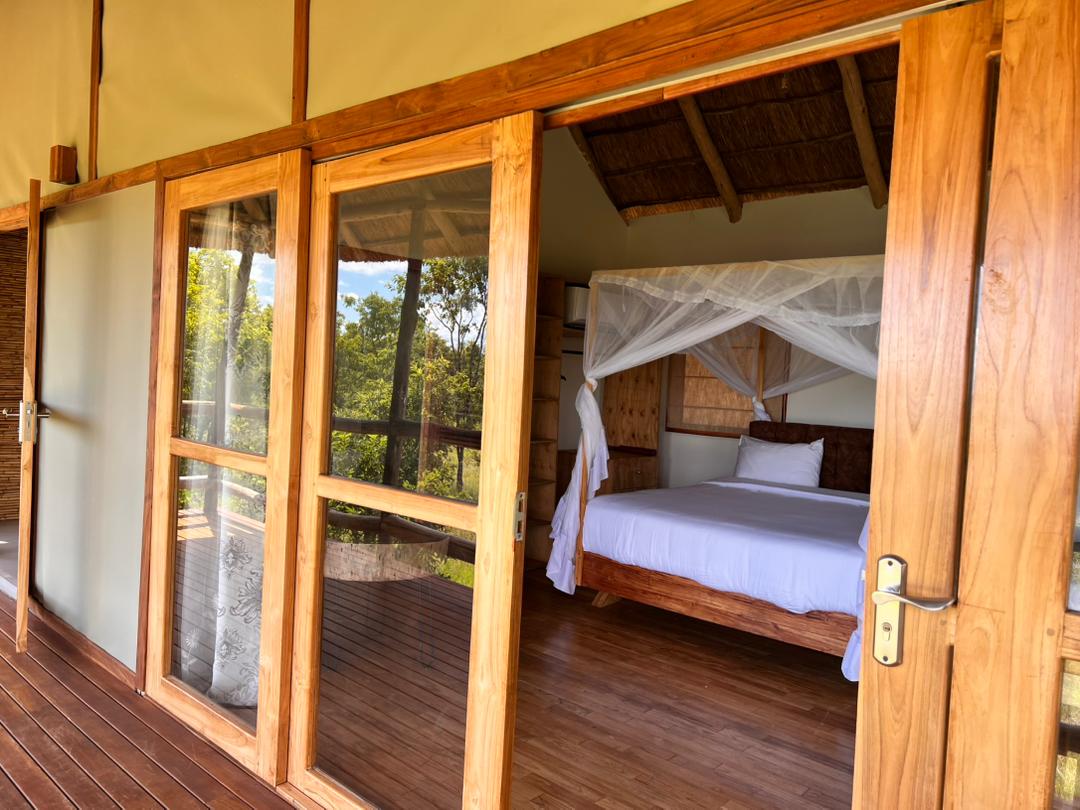
Where you stay influences how much of Mikumi you actually experience.
The park and its surrounding area offer different accommodation approaches, from campsites and basic facilities to lodges and permanent tented camps.
TANAPA lists accommodation and camping options associated with Mikumi, while its broader accommodation system includes different categories of stays within Tanzania’s national parks.
Staying within or very close to the park gives you an important advantage: proximity.
You spend less time commuting between your accommodation and wildlife areas, allowing more of your day to remain focused on the safari itself.
This is particularly valuable for travelers planning early-morning game drives.
Private lodges and permanent tented camps can offer a more comfortable safari experience, often combining accommodation, meals and safari logistics.
For couples, families or travelers looking for a more polished experience, this can be the better option.
Camping creates a more intimate connection with the environment.
It is especially attractive to travelers who value simplicity, atmosphere and the feeling of sleeping close to the wilderness rather than prioritizing luxury.
Do not choose accommodation based only on photographs.
Consider:
A beautiful lodge that adds unnecessary driving time can sometimes be less useful than a simpler property in the right location.
A successful Mikumi safari is usually determined by small decisions made before you arrive.
By road, Mikumi is approximately 280 – 290 km from Dar es Salaam, with the journey taking around four hours under favorable conditions. The route passes through Morogoro and continues toward the southern interior of Tanzania.
Mikumi can also be reached by air through Mikumi Airstrip, with scheduled and charter services available depending on the itinerary.
For international travelers arriving through Dar es Salaam, the road connection is one of the reasons Mikumi works so well as a first safari destination.
A 2-day/1-night safari can provide a meaningful introduction to Mikumi, especially when travel time is limited.
A 3-day/2-night itinerary gives you more breathing room and allows for multiple game drives without making the entire experience feel rushed.
If Mikumi is part of a southern Tanzania circuit, staying longer can make sense because the value comes from combining ecosystems rather than simply ticking off a park.
Bring practical safari essentials:
Binoculars are particularly useful in Mikumi because not every worthwhile sighting will be beside the road.
A national park is not a zoo.
Animals may appear calm, but they remain wild and unpredictable. Stay inside the vehicle unless your guide or park regulations explicitly allow you to leave it. Keep noise low, never feed wildlife and follow your guide’s instructions at all times. TANAPA’s visitor guidance emphasizes wildlife etiquette, licensed operators and adherence to park rules.
Park fees change according to residency, age, activity and applicable TANAPA tariffs, so travelers should verify the current official tariff before booking.
TANAPA’s current tariff listing shows Mikumi among its parks, with fees varying by visitor category.
Yes, especially if you understand what makes it different.
Mikumi is not trying to compete with every Tanzanian destination on remoteness or scale. Its strength is more practical and, in many ways, more intelligent:
It brings you into a genuine wildlife ecosystem without demanding that you spend days simply getting there.
For a traveler with limited time, that can be the difference between saying “I wish I had gone on safari” and actually waking up beneath the African sky, watching elephants move across the Mkata plains.
And sometimes, the best safari is not the one that requires the longest itinerary.
It is the one that fits your journey well enough that you can experience the wild without rushing through it.