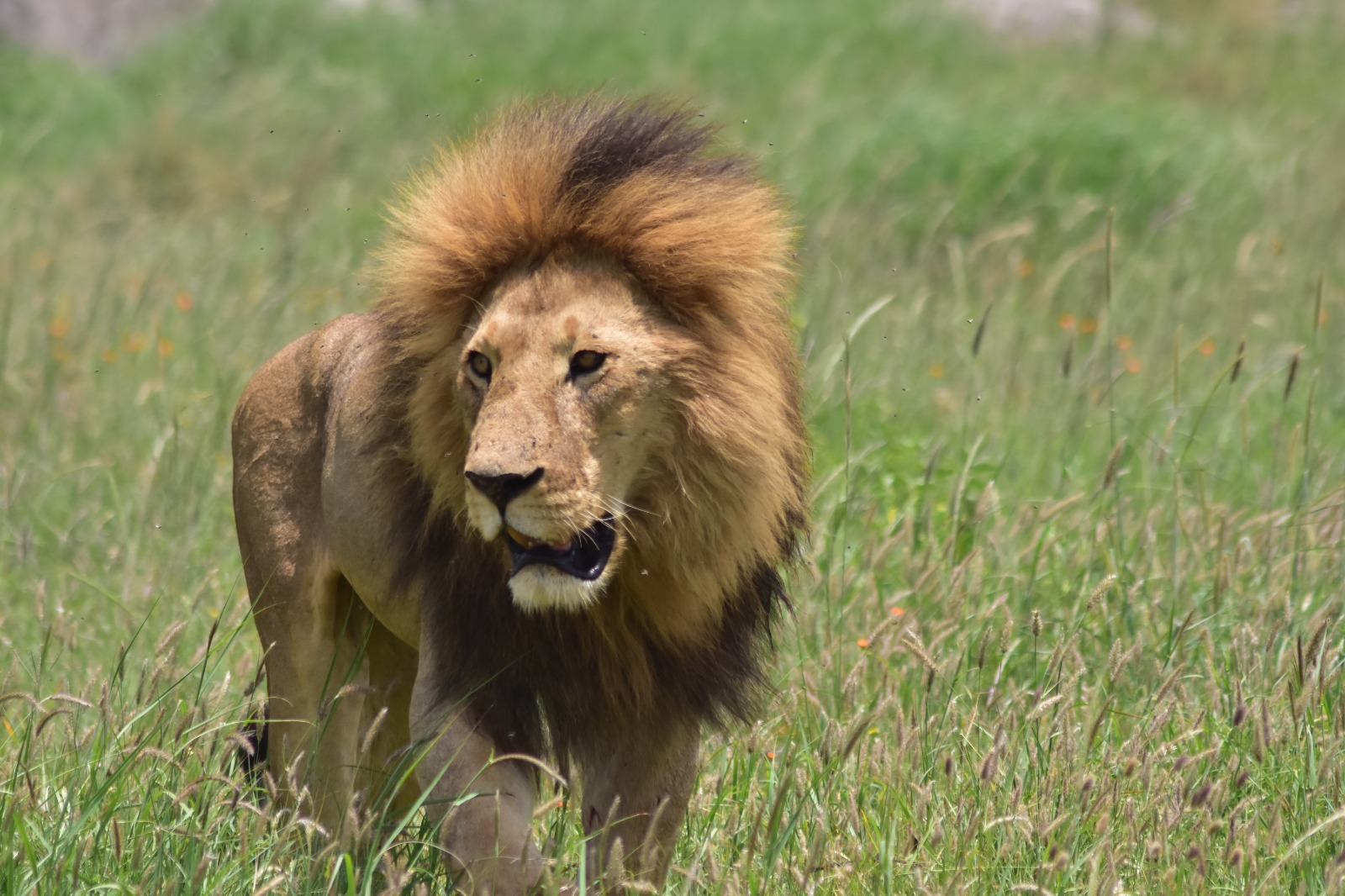
Many people around the world are eager to discover where, when, and on what budget they can see the Big Five in Africa. But let me tell you something: Tanzania offers an excellent chance to see all of the Big Five wildlife animals in their natural habitat!
If you want to see all five, there are special national parks and wildlife destinations in Tanzania where your chances of spotting them can be very high. With the right safari itinerary, you may even have the opportunity to see all five during your adventure.
The Big Five — Lion, Elephant, Leopard, Rhino, and Buffalo — can be found across Tanzania’s famous safari destinations, including Serengeti National Park
i National Park, Tarangire National Park, and the Ngorongoro Conservation Area. However, sightings are never guaranteed, especially for the elusive leopard and rhino.
Where does the term “Big Five” come from?
The term “Big Five” originated during the era of big-game hunting in Africa in the late 19th and early 20th centuries, particularly during the colonial period. It referred to five animals that hunters considered among the most dangerous and challenging to track and hunt on foot.
Today, the meaning of the Big Five has evolved. Rather than representing a hunting challenge, these magnificent animals have become symbols of Africa’s extraordinary wildlife and some of the most sought-after sightings on a Tanzania safari.
Why Tanzania Is One of the Best Places to See the Big Five
- Tanzania is home to one of the world’s largest lion populations, supported by its extensive wildlife habitats and conservation efforts. Its national parks also provide excellent habitats for African elephants, particularly in Tarangire, where large herds are commonly seen.
If seeing all the Big Five is your dream, Tanzania offers a remarkable opportunity. Serengeti National Park is famous for its lions and offers opportunities to spot elusive leopards, while buffalo can be seen in several parks, including Serengeti and Tarangire. For a chance to see the endangered black rhino, the Ngorongoro Crater is one of Tanzania’s best-known destinations.
My advice: Combine Serengeti, Tarangire and Ngorongoro for a Big Five safari that gives you the opportunity to search for all five animals in their natural habitats
- Tanzania offers excellent opportunities to see the Big Five because its Northern Safari Circuit includes world-famous wildlife destinations such as Serengeti National Park, Tarangire National Park and the Ngorongoro Conservation Area. These parks provide diverse habitats where lions, elephants, leopards and buffalo can be seen throughout the year, although sightings vary by location and season.
- Tanzania also protects endangered black rhinos, particularly in the Ngorongoro Conservation Area, giving visitors a chance to search for all five iconic animals on one safari
- One of Tanzania’s greatest advantages is that you can track the Big Five throughout the year, with each season offering unique wildlife experiences. Lions, elephants, leopards and buffalo can be found in several parks, while the endangered black rhino is protected in areas such as Ngorongoro.
MEET TANZANIA’S BIG FIVE
AFRICAN LION –THE KING OF SAVANA
Lion Sighting Chances ⭐⭐⭐⭐⭐
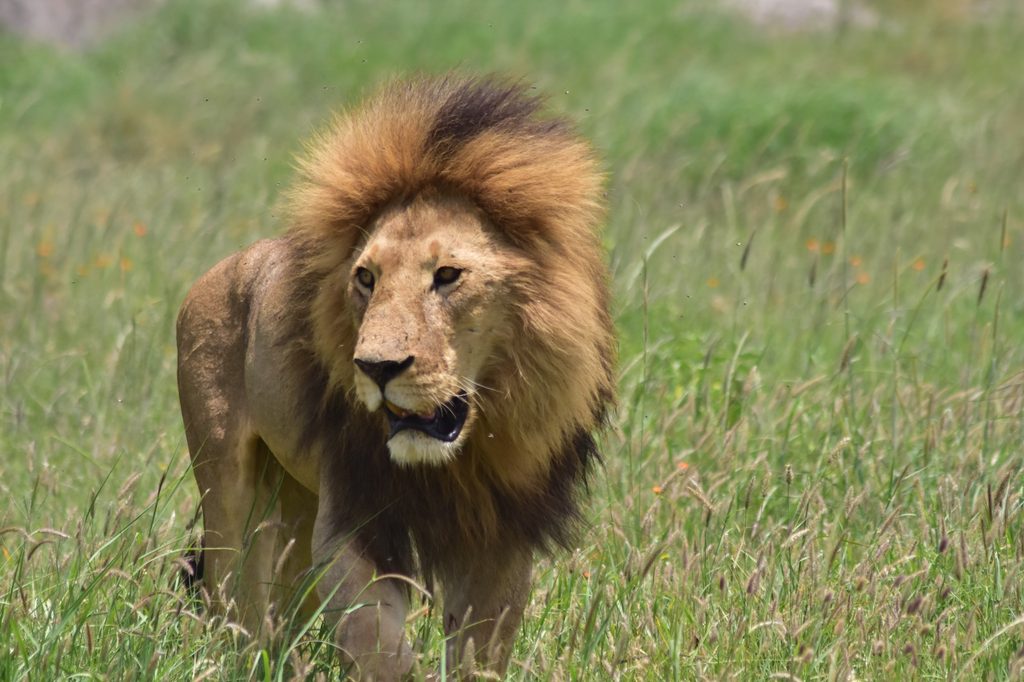
Swahili Name : Simba
The lion, known as Simba in Swahili, is one of Tanzania’s most iconic predators and a member of Africa’s Big Five. It is a powerful large cat with a tan-brown coat and white underparts. Adult males are recognised by their impressive manes, ranging from light to dark brown, with some older males developing almost black manes. Lions without manes have also been recorded in the Tarangire National Park and Ruaha Ecosystem .Cubs have light spots that usually fade as they mature, while the long tail ends with a distinctive black tuft. Tanzania is one of the best places in Africa to see lions in their natural habitat, especially in the Serengeti, Ngorongoro, Tarangire and Ruaha.
Best Places to See Lions in Tanzania
The best places to see lions in Tanzania are the Ngorongoro Crater and the Serengeti plains, where the short grass and excellent visibility make them relatively easy to find. Lions can also be seen regularly in several other Tanzania national parks, including Ruaha, Mikumi and Tarangire. These destinations offer excellent opportunities for travellers on a Tanzania safari to see lions in their natural habitat Pride home range from 25-225km square depending on prey density
AFRICAN LEOPARD (CHUI): TANZANIA’S MASTER OF CAMOUFLAGE
The Master of Stealth and also known as the Ghost of the African Wilderness.
Sighting Chances: ★★★☆☆
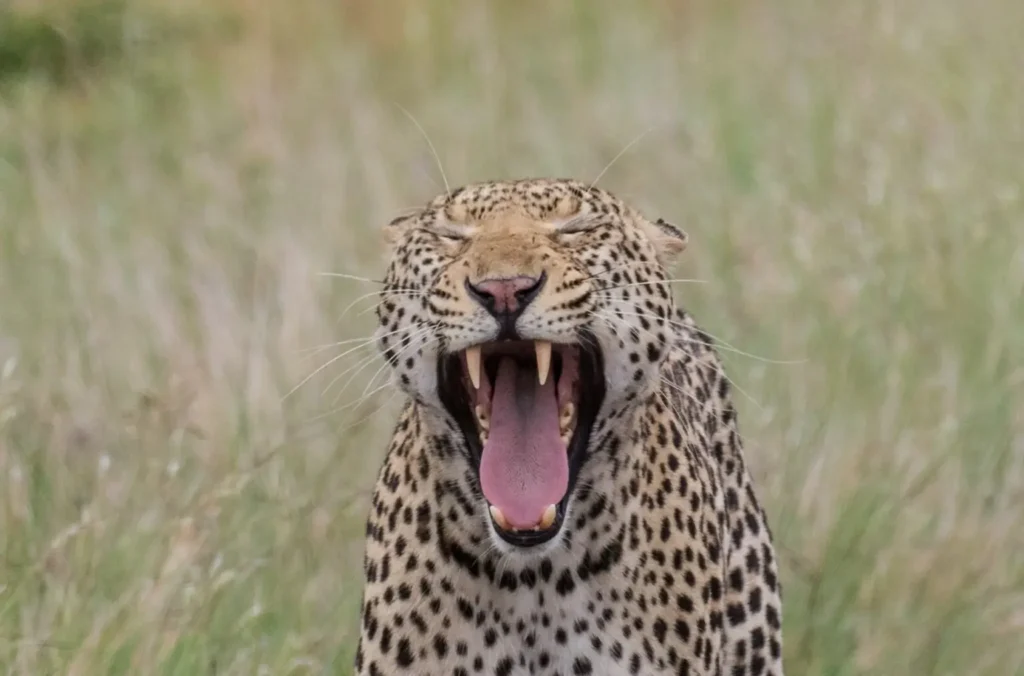
The leopard is a large, elusive wild cat recognised by its distinctive spotted coat. Its fur is yellow or golden-yellow, with white underparts. The spots on its back, sides and upper legs form beautiful black rosettes with brown centres, while the lower legs, head, neck and belly have solid black spots. Its long tail features black rosettes or spots above and white underneath. Melanistic leopards, commonly known as black panthers, have also been recorded. In Tanzania, spotting this elusive predator on a wildlife safari is an exciting experience, thanks to its remarkable camouflage and secretive behaviour.
Where to see Leopard in Tanzania
Serengeti National Park, particularly the Seronera area in central Serengeti, is one of the best places to see leopards in Tanzania. Look carefully in acacia and Kigelia trees along riverbanks, especially at dawn or dusk. Leopards can also be spotted along the main river in Ruaha National Park and around Silale Swamp in Tarangire National Park, particularly during the dry season. Although leopards occur in many parts of Tanzania, their excellent camouflage and secretive behaviour make them challenging to spot, making every sighting a special Tanzania safari experience
AFRICAN CAPE BUFALO: Cape Buffalo SWAHILI: Mbogo or Nyati
Sighting Chances: ★★★★★
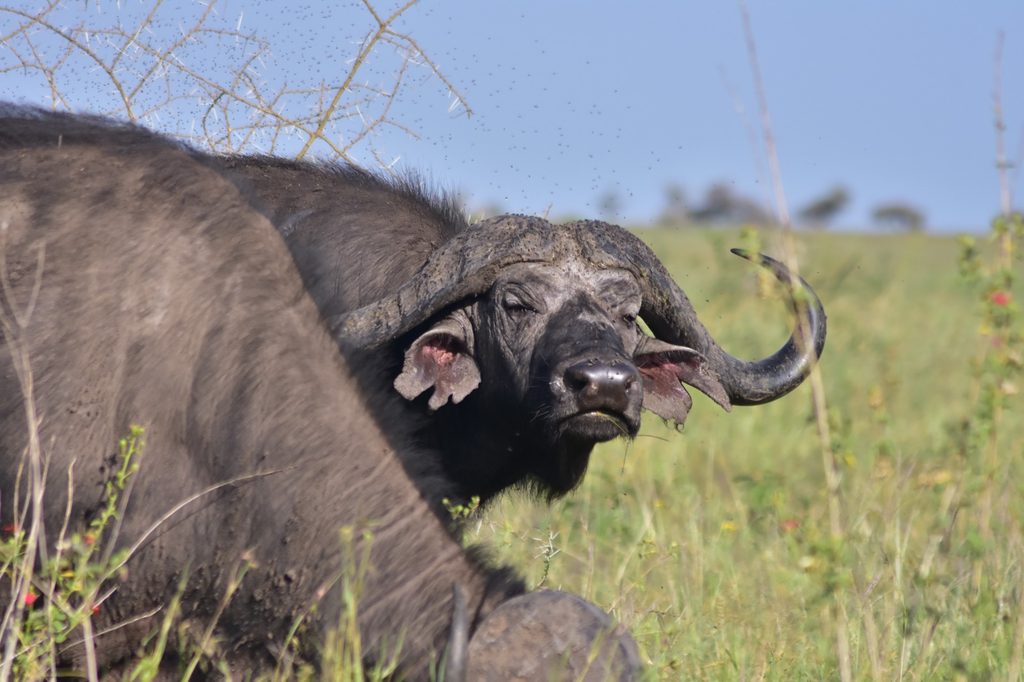
The African buffalo, also known as the Cape buffalo, is a powerful, heavily built wild animal and one of Africa’s famous Big Five. Its coat ranges from reddish-brown to dark black, with older males often becoming almost entirely black. Both males and females have strong horns that extend sideways from the head before curving upwards. Males have a heavier horn base than females, and recorded horn lengths can reach 162 cm (64 inches). Its long tail ends in a distinctive black tuft. For travellers planning a Tanzania safari, seeing African buffalo herds in their natural habitat offers an exciting wildlife experience in parks such as Serengeti, Ngorongoro, Tarangire and Ruaha.
AFRICAN ELEPHANT-THE GENTLE GIANT
Sighting Chances: ★★★★★ Excellent in Tarangire National Park
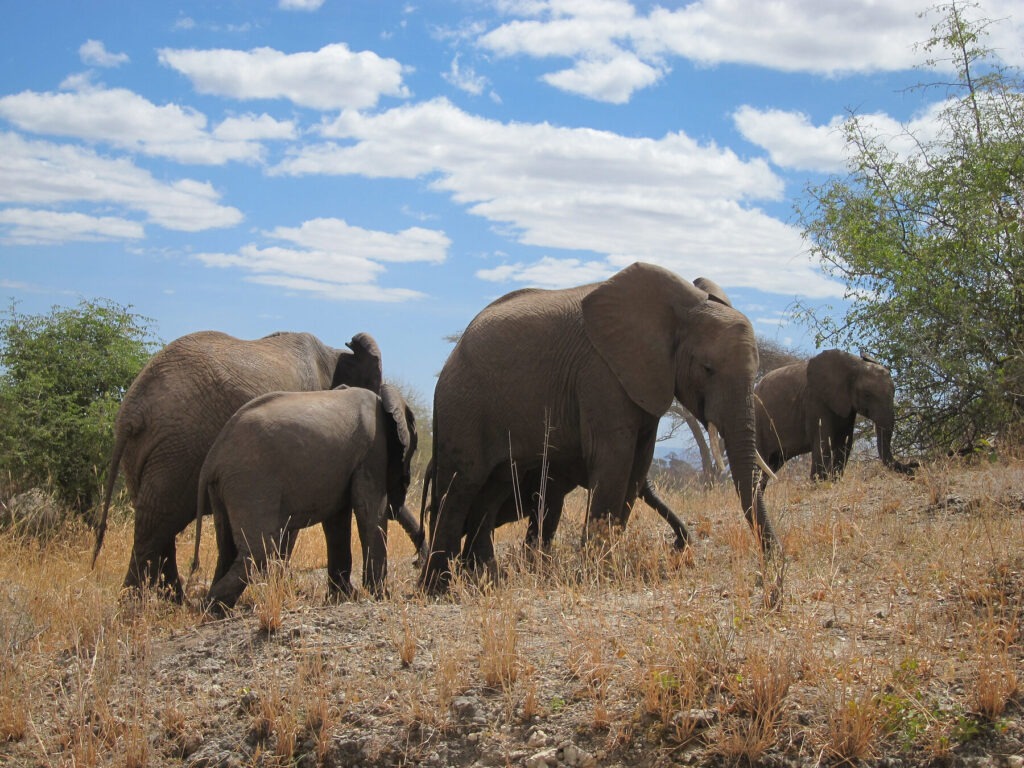
The African elephant is the largest land animal on Earth, and Tanzania is blessed with remarkable elephant populations thanks to its rich wildlife habitats and conservation efforts. Elephants can be seen in many Tanzania national parks, especially Tarangire National Park, famous for its large herds moving together like family groups.
Although elephants are generally peaceful when undisturbed, their behaviour can vary between ecosystems. For example, elephants in Mkomazi may be more wary of humans due to a history of hunting and disturbance. Known for their remarkable memory, elephants in Tarangire also help shape the landscape by stripping bark from baobab trees, creating a unique and unforgettable safari scene.
Best time to see African Elephant?
African elephants can be spotted throughout the year in Tanzania thanks to their large size and distinctive appearance. However, for travelers hoping to see elephants early in their safari, Tarangire National Park is an excellent choice for the first or second day of their journey, offering great opportunities to observe large herds while continuing the search for Africa’s other Big Five animals.
RHINOCEROS –ONE OF TANZANIA’S RAREST BIG FIVE
Swahili : Faru
Sighting Chances: ★★☆☆☆
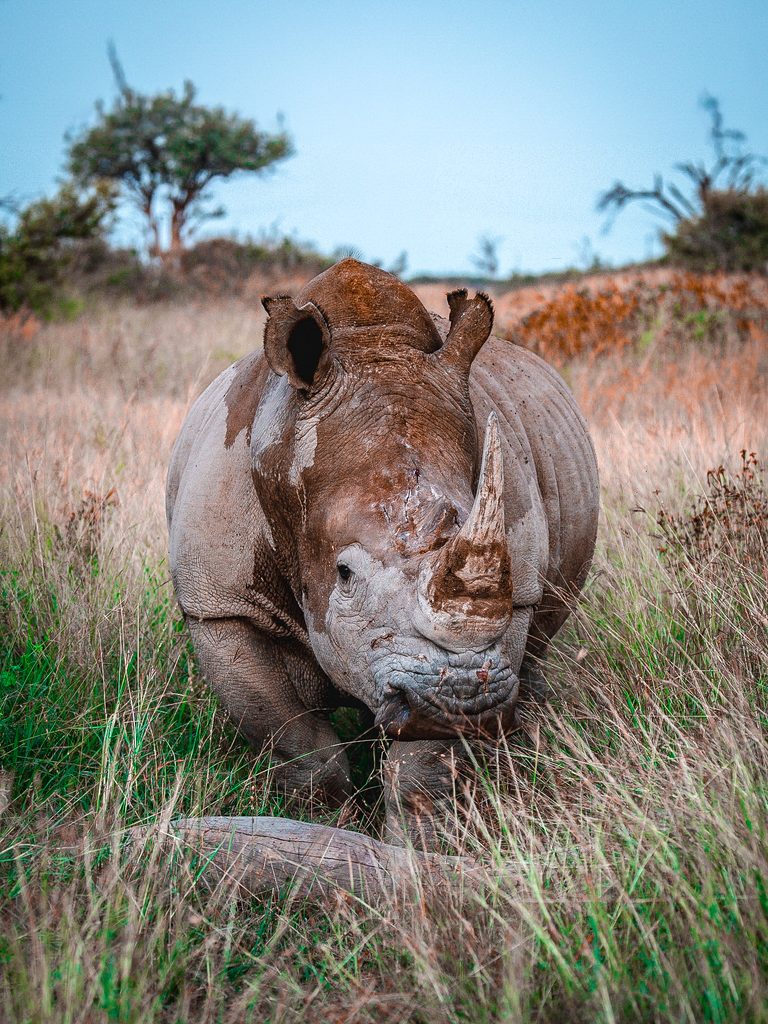
Tanzania is home to the Black Rhinoceros, one of Africa’s rarest and most endangered large mammals. The Eastern Black Rhinoceros (Diceros bicornis michaeli) is the main subspecies associated with Tanzania and can be found in protected areas such as the Ngorongoro Conservation Area, Serengeti National Park and Mkomazi National Park.
Historically, another subspecies, the South-Central Black Rhinoceros (Diceros bicornis minor), also occurred in southern Tanzania. White rhinoceroses have also been introduced into some protected areas.
As one of Africa’s Big Five, the black rhino is among the most challenging animals to spot on a Tanzania safari. Ngorongoro Crater offers one of the best opportunities to see this rare animal in its natural habitat. Make sure you have time and have an experience guide to fulfill your dream.
THE BIG FIVE: BEST PLACES TO SEE THEM IN TANZANIA.
| NATIONAL PARK | LION | LEOPARD | ELEPHANT | BUFFALO | RHINO |
| Tarangire | ⭐⭐⭐⭐☆ | ⭐⭐⭐☆☆ | ⭐⭐⭐⭐⭐ | ⭐⭐⭐⭐☆ | ☆☆☆☆☆ |
| Serengeti | ⭐⭐⭐⭐⭐ | ⭐⭐⭐⭐☆ | ⭐⭐⭐⭐☆ | ⭐⭐⭐⭐⭐ | ☆☆☆☆☆ |
| Ngorongoro | ⭐⭐⭐⭐⭐ | ⭐⭐⭐☆☆ | ⭐⭐⭐⭐☆ | ⭐⭐⭐⭐⭐ | ⭐⭐⭐⭐⭐ |
| Arusha NationaPark | ☆☆☆☆☆ | ⭐☆☆☆☆ | ⭐⭐☆☆☆ | ⭐⭐⭐⭐☆ | ☆☆☆☆☆ |
| Lake Manyara | ⭐⭐⭐☆☆ | ⭐⭐☆☆☆ | ⭐⭐⭐⭐☆ | ⭐⭐⭐⭐☆ | ☆☆☆☆☆ |
KEY INSIGHTS
1. Best Parks for a Big Five Safari in Tanzania
For the best opportunity to see Africa’s Big Five animals—lion, leopard, elephant, buffalo and rhino—combine Tarangire National Park, Serengeti National Park and Ngorongoro Crater. Each destination offers a different wildlife experience and increases your opportunities to encounter these iconic animals in their natural habitat.
2. Best Parks for Seeing Four of the Big Five
Choose Tarangire and Serengeti National Parks for excellent opportunities to see elephants, lions, buffalo and, with some luck, leopards. Adding Ngorongoro Crater can further improve your chances of seeing the Big Five, including the rare black rhino.
3. Best Place to See the Black Rhino
If seeing a black rhino is a priority, include a full-day game drive in Ngorongoro Crater. The crater is one of Tanzania’s best places to look for this rare and endangered member of the Big Five. However, sightings can never be guaranteed.
4. Recommended Duration: 7-Day Tanzania Safari
A 7-day Tanzania safari is an excellent choice for travellers who want enough time to explore Tarangire, Serengeti and Ngorongoro without rushing. It provides more opportunities to search for wildlife, enjoy different landscapes and experience Tanzania’s famous Big Five safari.
When to See the Big Five in Tanzania: Best Months for a Safari
| Season | Months | lion | Leopard | Elephant | Buffalo | Rhinoceros |
| High season.Dry season | July-October | Excellent — often easier to spot in open plains and near prey concentrations, especially in the Serengeti. | Very Good — thinner vegetation can improve visibility, particularly around Seronera’s riverine woodland. | Excellent — often easier to find near permanent water sources, especially in Tarangire | Excellent — large herds are frequently seen grazing across the Serengeti and Ngorongoro. | Good — Ngorongoro Crater offers one of Tanzania’s best opportunities to search for the endangered black rhino |
| Short rain | Nov-Dec | Good — resident lions remain active, while seasonal rains bring fresh grazing and migrating herds southwards | Good: Can be spotted year-round, although thicker vegetation may make sightings more challenging. | Good — elephants remain present, with local movements influenced by water and food availability | Good — buffalo remain widespread, including in the Serengeti and Ngorongoro. | Fair to Good — rhinos remain present in protected areas, but vegetation and distance may limit visibility |
| Calving Season | Jan-Feb | Excellent — the wildebeest calving season in the southern Serengeti and Ndutu attracts predators and creates dramatic wildlife encounters | Very Good — resident leopards remain active, especially in suitable woodland habitats such as Seronera. | Good to Very Good — elephants can be seen throughout the year, although sightings depend on the park and local conditions | Very Good — buffalo are resident in major wildlife areas, including Ngorongoro and Serengeti. | Good — Ngorongoro remains a strong destination for searching for black rhinos, regardless of the calving season |
| Green Season | MarMay | Good — lions remain present, but tall grass and lush vegetation can make spotting them more difficult. | Fair to Good — dense foliage can make leopards harder to locate, despite their year-round presence | Good — elephants remain present, and green landscapes offer excellent photography opportunities | Good — buffalo are present throughout the year, though herds may be more dispersed | Fair to Good — rhinos may be more difficult to spot when vegetation is thick or visibility is limited. |
| Early Dry Season | June | Very Good — vegetation begins to thin, improving visibility across many safari areas | Good to Very Good — improving visibility can help, particularly around riverine habitats in the Serengeti. | Very Good — elephants become easier to locate in some areas as the dry season develops. | Very Good — herds are frequently seen grazing in open grasslands and around water sources. | Good — Ngorongoro Crater remains a key area for searching for black rhinos, although sightings depend on luck and conditions. |
Tanzania Big Five Safari Itinerary
BIG FIVE FREQUENTLY ASKED QUESTION
Which Tanzania Park is the Best for seeing all Big Five
Ngorongoro Crater is one of the best places to see the Big Five in Tanzania. Its unique volcanic landscape and high concentration of wildlife make it a remarkable safari destination. It also offers an opportunity to spot the endangered black rhino, making a Ngorongoro safari an unforgettable wildlife experience . For better view and unforgettable Safari plan for Tarangire, Ngorongoro and Serengeti Safai.
What is the best time of year for Big five Safari?
The best time for a Big Five safari in Tanzania is from June to October, when the dry-season conditions often make national parks more accessible and wildlife easier to spot. As water becomes scarcer and vegetation thins, animals may gather around remaining water sources, creating excellent opportunities to see lions, elephants, leopards, buffaloes, and black rhinos. For the best experience, consider visiting Serengeti National Park, Tarangire National Park, and Ngorongoro Crater. Although wildlife viewing is often excellent during these months, sightings of all five animals are never guaranteed.
How much does it cost for seeing All Big Five?
For two people to experience a Tanzania Big Five safari, we recommend a minimum budget of USD 1,700 for a 5–6 day safari, depending on the travel season, accommodation choices, and itinerary. This budget allows you to explore some of Tanzania’s best wildlife destinations, including Tarangire National Park, Serengeti National Park, and the Ngorongoro Crater, with opportunities to spot the Big Five: lions, elephants, leopards, rhinos, and buffaloes.
Is it safe to go for a safari in Tanzania/Africa
Yes, Tanzania is generally a safe destination for a Big Five safari, with well-established national parks and experienced safari guides. By choosing a reputable tour operator and following safety guidelines, you can enjoy an unforgettable wildlife adventure with peace of mind.
How many days do you need for a Big Five Safari in Tanzania?
Seeing the Big Five in Tanzania is not just about how many days you spend on safari; having an experienced safari guide who knows where and how to find wildlife is equally important. A 5–7 day Tanzania Big Five safari is generally enough time to explore top wildlife destinations such as Serengeti, Tarangire, and Ngorongoro at a relaxed pace, giving you excellent opportunities to spot lions, elephants, leopards, rhinos, and buffaloes.
Which one? Private or group Safari?
A private Tanzania safari offers more flexibility, personalized service, and greater freedom to spend time searching for the Big Five with your experienced guide. A group safari is more affordable and allows you to share the adventure with other travelers. If your goal is a comfortable, personalized Big Five safari, we recommend a private safari with 12Leosafaris.
READY TO EXPERIENCE TANZANIA’S BIG FIVE?
Imagine watching a lion resting in the golden African grasslands, seeing elephants roaming freely across the savannah, spotting a leopard hidden in the trees, and searching for the rare black rhino in its natural habitat.
Tanzania offers extraordinary opportunities to experience Africa’s Big Five, especially when you visit the right wildlife areas with an experienced safari guide who understands animal behaviour and knows where to look.
At 12Leosafaris, we are a locally owned Tanzanian safari company dedicated to creating memorable, tailor-made safari experiences. Whether you are planning a 5-day Big Five safari or a longer adventure combining Tarangire, Ngorongoro Crater and Serengeti National Park, we can help you plan a journey that matches your interests, travel dates and preferred level of comfort.
Your African safari is more than a holiday. It is an opportunity to experience wildlife, discover Tanzania’s beautiful landscapes and create memories that last a lifetime.
Are you ready to begin your Big Five adventure?
Contact 12Leosafaris today, and let us help you plan your Tanzania Big Five safari.