
Mount Meru is Tanzania’s second highest mountain and one of East Africa’s most rewarding trekking destinations. Rising above Arusha, the mountain combines dramatic volcanic scenery, montane forest, open moorland and a summit experience that feels very different from a conventional safari.
For many travelers, Mount Meru is more than an alternative to Kilimanjaro. Its quieter trails, changing landscapes and close connection to Arusha National Park create a mountain journey where wildlife, wilderness and high altitude gradually come together.
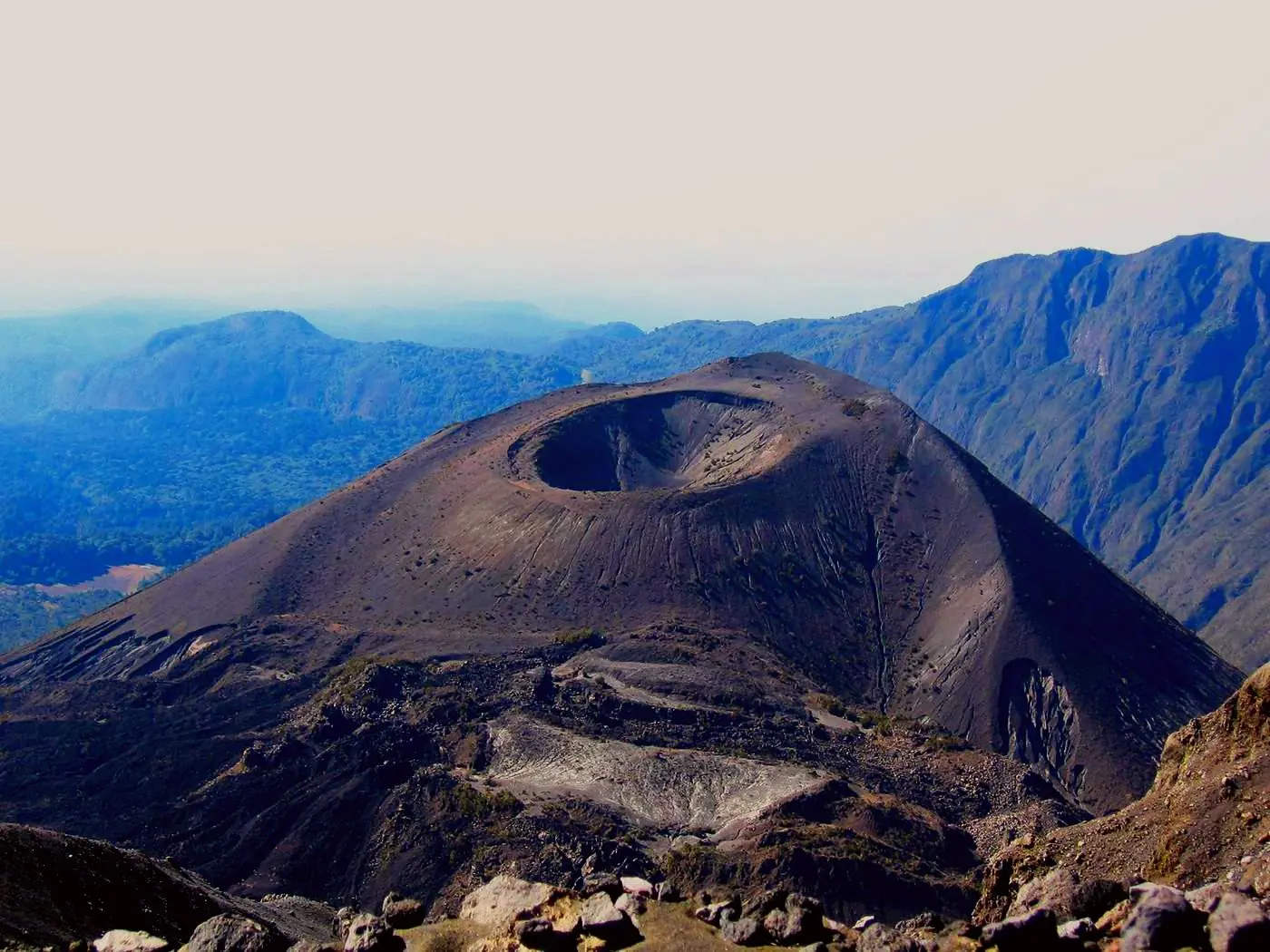
One of Mount Meru’s greatest advantages is its location. The mountain rises within Arusha National Park, making it possible to combine a demanding mountain trek with a classic northern Tanzania safari experience.
The journey begins in a landscape where forest and wildlife dominate, then gradually moves into higher elevations where the vegetation becomes more open, the air becomes cooler and the views become increasingly dramatic.
Mount Meru reveals a side of Tanzania that is easy to miss when the country is viewed only through its famous wildlife destinations.
Instead of spending the entire journey looking across open savannah, you move through distinct ecological zones as elevation changes. Forest, heath, moorland and volcanic terrain create a sense of progression that makes the climb feel like several landscapes within one expedition.
Mount Meru is part of a volcanic landscape shaped by powerful geological forces. Its enormous crater and steep inner walls give the mountain a distinctive character, while the summit ridges create spectacular views across the surrounding landscape.
On clear mornings, the mountain can also provide impressive views toward Mount Kilimanjaro.
Mount Meru can be an excellent preparation climb for travelers planning to trek Kilimanjaro.
It allows trekkers to experience several important aspects of mountain climbing, including sustained ascent, changing temperatures, early morning summit movement and the physical demands of hiking at altitude.
The value is not simply physical preparation. The mountain also gives you an opportunity to understand how your body responds as elevation increases.
Mount Meru generally offers a quieter trekking environment than Kilimanjaro.
That changes the character of the experience. Instead of feeling like you are moving through a heavily traveled mountain route, the trail can feel more intimate, allowing greater attention to the forest, volcanic formations, wildlife and changing atmosphere of the mountain.
Mount Meru can be climbed during much of the year, but trekking conditions vary with the seasons.
The dry seasons are generally preferred because trails tend to be easier to navigate and visibility can be better, particularly around the higher sections of the mountain.
The wetter periods can bring more challenging trail conditions, especially where rain makes sections of the route muddy or slippery. However, changing weather can also create a more dramatic mountain atmosphere, with mist moving through the forest and clouds gathering around the volcanic slopes.
The drier months are often attractive for trekkers looking for more predictable conditions.
Trails are generally more comfortable, visibility can improve and the higher sections of the mountain may offer clearer views.
This period is particularly appealing if the trek is part of a larger northern Tanzania itinerary involving Arusha, Serengeti, Ngorongoro or Kilimanjaro.
Rain can make the experience more demanding, but it does not necessarily make the mountain inaccessible.
The forest can become greener and atmospheric, while mist and cloud can transform the landscape into something much more mysterious.
The important consideration is that trekkers should be prepared for changing weather rather than planning around the expectation of consistently dry conditions.
There is no single perfect month for every Mount Meru traveler.
If your priority is comfortable trekking and clearer mountain views, prioritize the drier periods. If you value solitude, dramatic weather and lush scenery, you may be more comfortable accepting some rain.
For travelers using Mount Meru as preparation for Kilimanjaro, the best timing may also depend on when the Kilimanjaro climb is scheduled.
A Mount Meru trek can stand alone, but it becomes even more compelling when incorporated into a northern Tanzania travel itinerary.
The classic experience is a multi-day ascent toward Socialist Peak, the highest point of Mount Meru.
The trek moves through different vegetation zones as elevation increases, creating a natural story of changing climate, landscape and altitude.
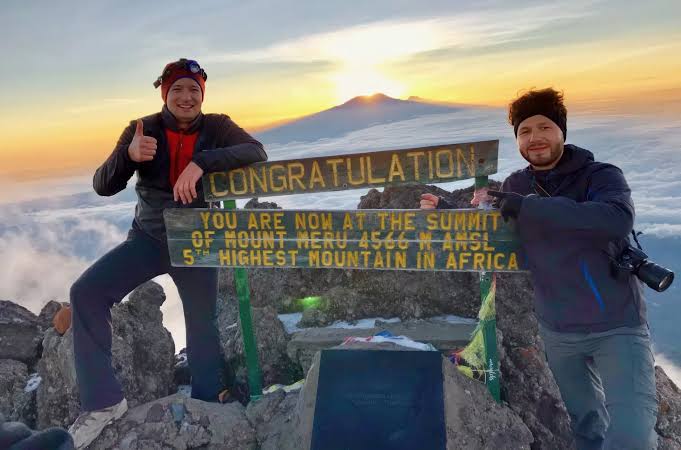
Summit day normally begins during the night or very early morning so trekkers can reach the higher ridge around sunrise.
That timing is not only about reaching the summit. It is also about experiencing the mountain at one of its most dramatic moments, when darkness gradually gives way to views across the surrounding landscape.
Combining Mount Meru with Kilimanjaro creates a powerful northern Tanzania mountain itinerary.
Mount Meru can provide an introduction to altitude, trekking rhythm and mountain logistics before the longer Kilimanjaro expedition.
The two mountains also offer contrasting experiences. Meru feels more volcanic, intimate and wilderness-oriented, while Kilimanjaro provides the scale and iconic status of Africa’s highest mountain.
A Mount Meru trek can also be combined with wildlife destinations in northern Tanzania.
A well-designed itinerary might connect Arusha National Park, Mount Meru and destinations such as Tarangire, Ngorongoro and Serengeti.
This creates a journey that moves between mountain landscapes and wildlife ecosystems rather than concentrating entirely on one type of experience.
Because the mountain is so close to Arusha, it can fit naturally into an itinerary beginning or ending in the city.
This makes it particularly useful for travelers who want to experience trekking without dedicating their entire Tanzania journey to a mountain expedition.
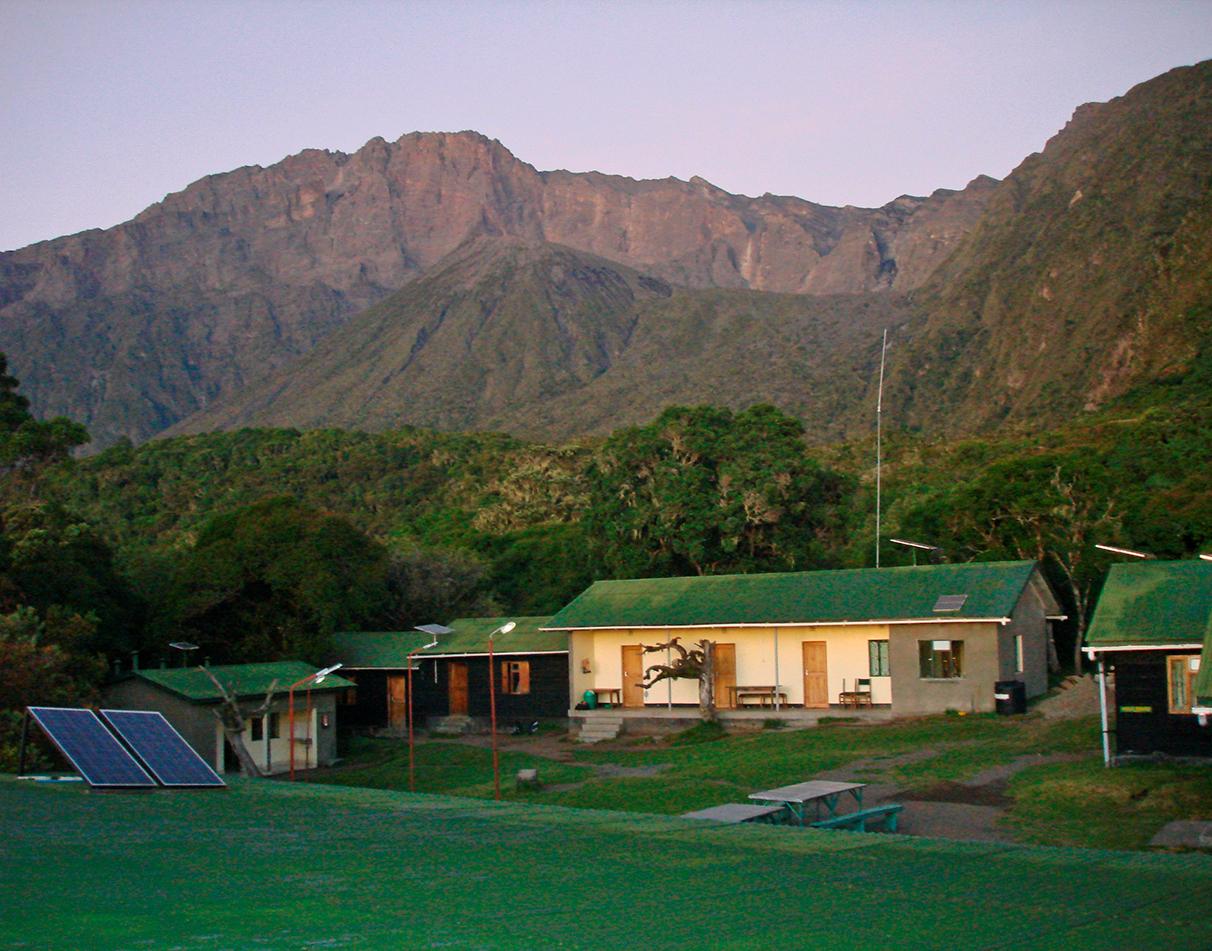
Accommodation during a Mount Meru trek is different from a conventional Tanzania safari.
The experience is centered on mountain camps and trekking infrastructure rather than luxury lodges.
Depending on the route and itinerary, trekkers stay at designated mountain accommodation points along the ascent.
These provide a practical base for resting between trekking stages and preparing for the next section of the climb.
The atmosphere is fundamentally different from staying at a safari lodge. The focus is on the mountain, the trail and the rhythm of the expedition.
Many Mount Meru itineraries begin with accommodation in or around Arusha.
This provides an important transition between international travel and the mountain environment.
A comfortable pre-trek stay allows time for rest, preparation and final equipment checks. After the trek, returning to a comfortable hotel or lodge can make the contrast especially noticeable.
Travelers combining Mount Meru with an Arusha National Park or northern Tanzania safari can choose from a range of lodges and camps outside the mountain trekking sections.
The right accommodation depends on whether your priority is convenience, privacy, luxury, proximity to the park or integration with a broader safari itinerary.
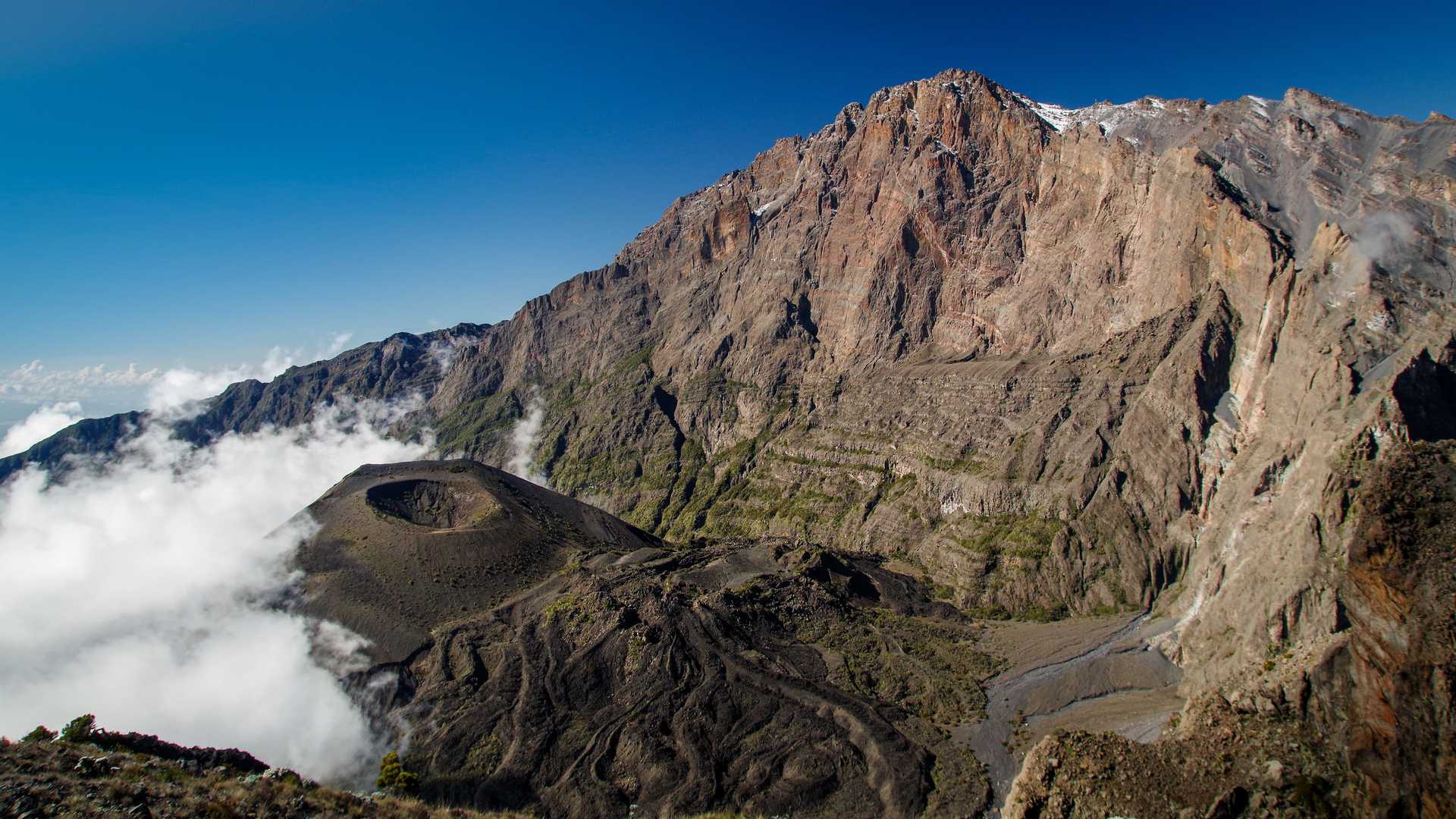
Mount Meru passes through different climatic environments, so conditions can change significantly as you climb.
Warm conditions near lower elevations can give way to cold temperatures higher on the mountain, particularly before sunrise.
Layering is therefore more useful than relying on one heavy item of clothing.
Mount Meru is a high-altitude mountain, and physical fitness alone does not determine how someone responds to elevation.
Move at a controlled pace, stay hydrated and communicate with your trekking team if you experience symptoms that concern you.
The objective is not simply to walk quickly toward the summit. It is to allow your body enough time to adapt as the environment changes.
Even during generally favorable trekking periods, mountain weather can change quickly.
Waterproof clothing, warm layers, suitable hiking footwear, a headlamp and other essential trekking equipment should form part of your preparation.
Mount Meru is not simply a long hike. It is a mountain expedition requiring appropriate route knowledge, logistics and safety procedures.
A professional trekking team can help manage pacing, accommodation, equipment, changing weather and altitude-related concerns throughout the journey.
Although Mount Meru can be useful preparation for Kilimanjaro, reducing it to a training exercise misses much of what makes the mountain special.
Its volcanic crater, forest environment, wildlife encounters, narrow ridges and changing landscapes create a distinct experience in its own right.
The better approach is to see Mount Meru as both a mountain destination and a complete wilderness experience.
Mount Meru rewards travelers who enjoy journeys that become more dramatic with every stage.
You begin among the forests and wildlife of Arusha National Park. The landscape gradually opens as the altitude increases. Vegetation becomes more specialized, temperatures fall and the volcanic character of the mountain becomes increasingly visible.
Then comes the final ascent.
In the darkness before sunrise, the experience becomes less about the landscape you can see and more about the rhythm of your own movement. Step by step, the mountain becomes quieter, colder and more demanding.
When daylight finally reaches the summit ridge, the effort becomes easier to understand.
You are no longer simply climbing a mountain near Arusha. You are standing inside one of Tanzania’s most remarkable volcanic landscapes, looking back across the terrain you have climbed and toward the wider world beyond it.
That is what makes Mount Meru worth experiencing on its own terms.